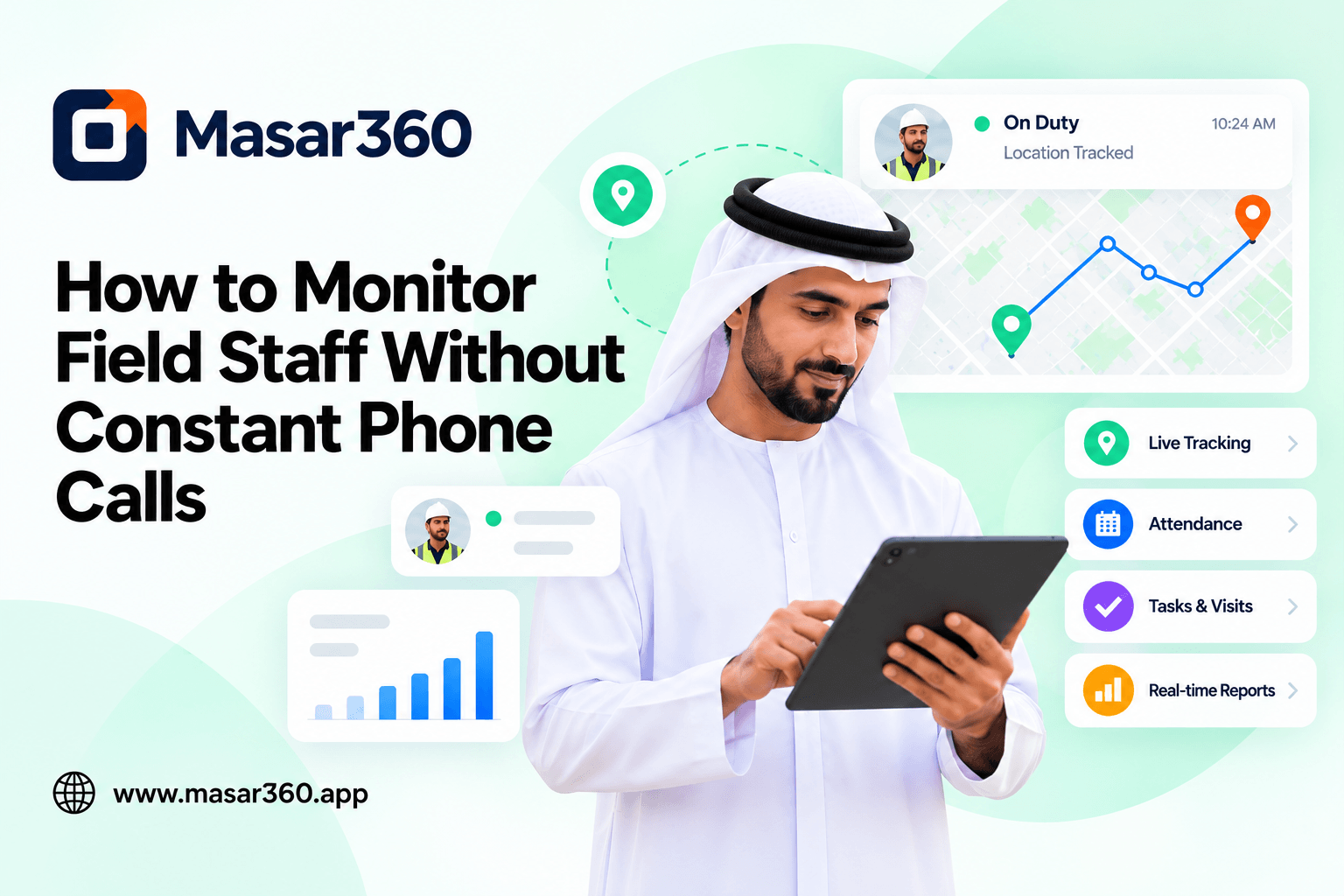
Managing field employees across different locations can be challenging when every update depends on a phone call. Managers need to know whether employees have reached their destinations, completed assigned tasks, and visited customers as planned.
For businesses across the Middle East, including sales, logistics, construction, and maintenance teams, frequent follow ups can take time away from more important work. The challenge is to maintain clear communication, keep track of daily activities, and ensure work progresses as planned without interrupting employees throughout the day.
6 Ways to Monitor Field Staff Without Constant Phone Calls
Monitoring field staff does not require managers to check in with every employee throughout the day. A clear process for tracking locations, recording visits, updating tasks, and reporting progress can help managers stay informed while allowing employees to focus on their work.
1. Use GPS Tracking to Check Employee Locations
GPS tracking helps managers understand where field employees are during working hours without asking them to share their location through repeated calls or messages. It is particularly useful for businesses with sales representatives, delivery personnel, maintenance teams, and employees visiting multiple customer locations.
Managers can use location information to check whether employees are travelling between assigned locations and identify situations that may require attention. Clear policies should explain when location tracking is active and how the data is used.
2. Set Up Digital Attendance and Check Ins
Manual attendance records and phone based check ins can make it difficult to confirm when employees start work or arrive at an assigned location. Digital attendance systems provide a more consistent way to record attendance and reduce routine follow ups.
For field teams, location based check ins can help managers verify attendance at designated sites or customer locations, where the system supports this feature. This is useful for businesses operating across multiple branches, project sites, and service areas.
3. Track Field Visits and Task Completion
Knowing an employee’s location does not always explain what work has been completed. Managers also need visibility into scheduled customer visits, assigned tasks, and outstanding activities.
A structured visit and task tracking process allows employees to update progress as they complete their work. For example, a sales representative can record a customer visit, while a maintenance technician can update the status of an assigned service request. Managers can review these updates instead of calling employees after every appointment.
4. Automate Daily Reports and Status Updates
When employees prepare reports manually or send updates through separate messages, managers may spend considerable time collecting information and following up on missing details.
Standardised digital reports allow field employees to submit visit outcomes, completed tasks, pending work, and relevant notes through a consistent process. Where automated reporting is available, managers can review daily progress without requesting the same information individually.
5. Set Alerts for Delays and Missed Activities
Not every field activity requires a phone call. Managers should focus their attention on exceptions, such as missed appointments, delayed tasks, or incomplete activities that could affect customers or business operations.
Alerts can help bring these situations to a manager’s attention when predefined conditions are met. Instead of checking every employee repeatedly, managers can prioritise the cases that genuinely require action. Alert rules should be configured carefully to avoid unnecessary notifications.
6. Use One Platform for Field Team Updates
When location information, attendance records, task updates, and reports are spread across different tools, it becomes harder to understand the overall progress of a field team.
Using a centralised platform can make relevant operational information easier to access in one place. Employees can follow a consistent process for recording activities, while managers can review progress and identify outstanding work without switching between multiple communication channels.
This approach is especially useful for businesses managing field employees across different cities, customer locations, and project sites throughout the Middle East.
How Does Field Staff Monitoring Software Help?
Field staff monitoring software brings employee location data, attendance records, task updates, and field reports into one place. Instead of collecting updates through separate calls and messages, managers can review daily activities and identify tasks that need attention.
For businesses managing field teams across the Middle East, this can make day to day coordination easier, particularly when employees work across multiple customer locations, branches, or project sites.
The main benefits include:
Better visibility into field activities: Managers can review employee locations, route history, and visit records to understand how field activities are progressing.
Less manual follow up: Digital check ins, task updates, and centralised reports reduce the need to contact employees individually for routine information.
Faster identification of delays: Location based alerts and activity updates can help managers identify missed visits or tasks that need attention, where the relevant features are configured.
Clearer performance reporting: Attendance records, visit metrics, and productivity reports help managers review team activity and identify areas for improvement.
More organised field operations: Task assignments, shift planning, leave management, and expense approvals help bring everyday workforce processes together.
The aim is not to monitor every movement or interrupt employees throughout the day. It is to give managers access to the information they need while allowing field teams to complete their work with fewer unnecessary interruptions.
Manage Your Field Team More Efficiently with Masar360
Managing field employees becomes easier when managers can access location information, attendance records, task progress, and workforce reports without collecting updates through repeated calls. A dedicated field workforce management platform can help bring these activities together.
Masar360 helps businesses organise field operations through capabilities designed for employee tracking, attendance management, task coordination, route planning, and workforce reporting.
For businesses across the UAE, Saudi Arabia, and other GCC markets, these capabilities can support better coordination between managers and employees working across multiple locations. Instead of relying on frequent phone calls for routine updates, managers can use centralised information to review progress and identify activities that need attention.
If your team spends too much time chasing updates from field employees, Masar360 could be worth exploring. Book a free demo to discuss your workforce management needs and see how the platform could fit your operations.
Spend Less Time Chasing Updates. Manage Your Field Team Better.
See how Masar360 can support your field operations and help your team work more efficiently.
Book a Free Demo